Lusaka, Zambia · 13–15 April 2026
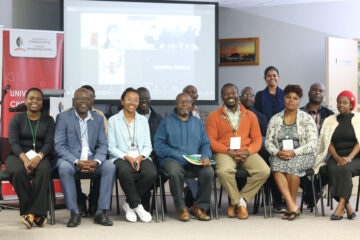
The Greenovations Africa II Hybrid Midterm Workshop was held on 13-15th April 2026 in Lusaka, Zambia, and brought together 42 participants ensuring broad engagement from Zambia’s policy and finance ecosystem, across Africa and Latin America. The event offered a space to exchange fresh insights, reflect on emerging evidence, and sharpen collective learning on bridging the gap between climate finance and climate action for grassroots female green entrepreneurship.
Participants included Advisory Committee members, USE-IT South Africa, government representatives from Zambia’s Ministry of Green Economy and Environment and Ministry of Lands and Natural Resources, climate finance actors, private sector representatives such as Lloyd’s Financials Ltd, and researchers, women entrepreneurs from informal and opportunity segments including Nsansala Conservancy Ltd and the Recycling Scheme for Women and Youth Empowerment (RESWAYE), alongside innovators like Greenfire Innovations Ltd.
A deep dive into women entrepreneurs’ journeys highlighted how climate risks and care responsibilities interact to create a reinforcing cycle of constraint, limiting both economic opportunities and resilience. These discussions established a shared baseline of evidence, enabling participants to engage in more targeted discussions on challenges, gaps, and potential solutions in later sessions.
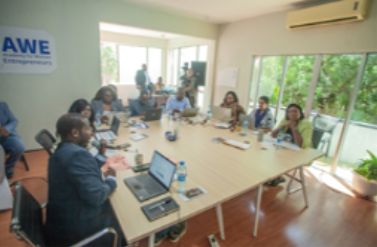
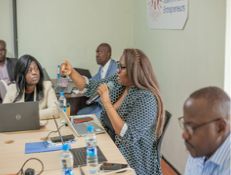
Deliberations among the consortium members (UNU VIE; NCIC; UNFCCC RCC; WEAC; AIIKS)
Unlocking Finance for Grassroots Women Entrepreneurs
A key workshop discussion centred on why women, particularly in rural and urban informal settings, remain excluded from climate finance despite acting as frontline climate solution leaders. A multi-stakeholder panel bringing together the Ministry of Lands and Natural Resources, UNFCCC RCC, Lloyd’s Financials Ltd, and Nsansala Conservancy Ltd identified persistent structural barriers:
- Complex application processes and collateral requirements misaligned with small-scale, informal realities
- Limited integration of care considerations within climate finance frameworks
- Insufficient local intermediaries to bridge global finance systems and community-level needs
Participants of the Climate Finance Panel Discussion called for simplified and tiered funding mechanisms, blended finance models adapted to small-scale entrepreneurs, and care embedded as a core, not secondary, consideration in finance and policy. IDRC further highlighted the need to translate research outputs into actionable financing mechanisms grounded in local, demand-driven realities rather than externally designed models.
The Green Entrepreneurs Climate Impact Model (GECIM)
As a concrete step toward ensuring grassroots women entrepreneurs can also participate in the climate finance playing field, the project team shared the Green Entrepreneurs Climate Impact Model (GECIM) – a simple evidence-to-impact tool that enables grassroots entrepreneurs to quantify their climate action contribution and capture their climate solution in a structured, investor-ready format.
The tool, which leverages both quantitative and qualitative impact data, received appreciation for its efforts to bridge the data and finance gap for women. Participants also flagged the need to enhance its usability for different literacy and language needs to ensure full inclusivity.
Key feedback from participants included:
- Aligning GECIM metrics with existing investor and climate finance standards
- Simplifying the platform to ensure accessibility for grassroots users
- Clarifying the primary objective of the platform – whether financing access, policy influence, or knowledge sharing
- Ensuring the role of intermediaries in supporting data collection and validation
Consortium Partners in Attendance
UNU VIE · NCIC · UNFCCC RCC · WEAC · AIIKS · AVINA · IDRC
Field Visits: The Different Faces of Climate Solution Leaders in the entrepreneurship space of Africa – insights from Zambia
The field visit component of the Greenovations 2 project shined a light on a most overlooked dimension of the female entrepreneurship space in Africa. The project team visited three sites in Lusaka that powerfully illustrated how the care-climate–finance nexus plays out, reaffirming that women are central to climate action but remain insufficiently supported and recognised.
Msisi Market – Charcoal Sellers
A visit to Msisi Market showed that most women involved in the informal charcoal trade were widows and single mothers, with stories of extraordinary resilience in the face of juggling livelihoods and care responsibilities. Working hours stretch from early morning to late evening, creating significant time poverty and physical strain. A key concern raised was the environmental sustainability of charcoal production: most trees felled are over 100 years old. Yet despite these environmental risks, charcoal trading remains a critical livelihood and, notably, a key input for alternative energy solutions such as briquette production – as briquette entrepreneurs purchase charcoal dust as a waste by-product from the women sellers. Women’s economic participation is largely sustained through informal financial arrangements including peer-based borrowing and supplier credit, reflecting constrained access to formal finance and heightened financial vulnerability. Strong social cohesion and informal solidarity mechanisms provide essential support in the absence of formal safety nets.
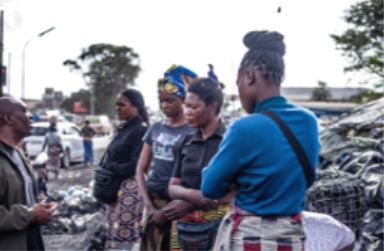
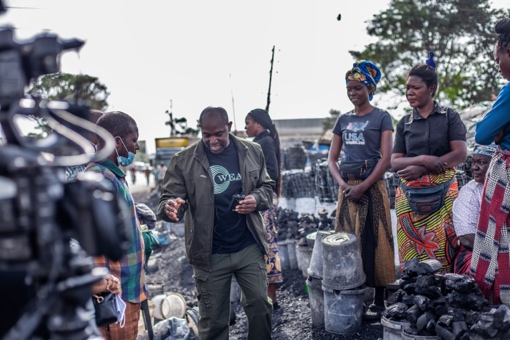
Women in Msisi Market carrying out charcoal production
Waste Collection & Recycling Site
The visit to a waste collection and dumping site underscored the critical yet under-recognised role women play in informal recycling and waste management systems. Women work long hours, typically from 6:00 AM to 8–9:00 PM, under challenging conditions, facing serious health risks from smoke, hazardous materials and absence of protective equipment, alongside limited access to water, sanitation and healthcare. While their labour sustains urban waste recovery and delivers genuine environmental outcomes, many women in this sector do not recognise their own work as contributing to climate action, despite its clear and measurable impact. Social dynamics revealed strong community networks, including shared childcare responsibilities, but the presence of child labour and limited access to education highlighted deeper structural vulnerabilities.
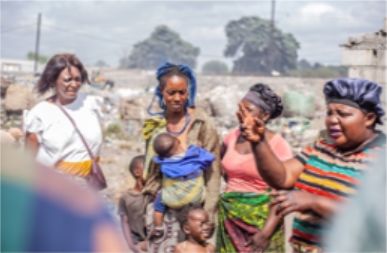
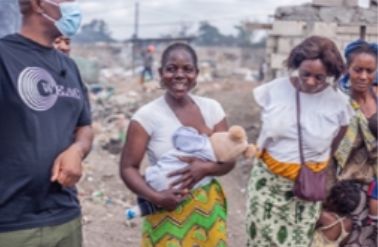
Women in urban informal waste collection and recycling in Lusaka, Zambia
Greenfire Innovations Ltd – Opportunity Entrepreneur
The visit to Greenfire Innovations Ltd, led by Ms Hildah Nakatunga, presented a striking contrast to the previous sites. Representing a more formalised green enterprise, Ms Nakatunga demonstrated how structured business models can scale climate-friendly solutions, such as briquette production, into commercially viable and scalable impact. The gap between her formal enterprise and the informal sector women visited earlier extended far beyond infrastructure and access to resources: it was also visible in her ability to articulate with greater ease and confidence her pathway to accessing finance and markets. This contrast underscores the opportunity for stronger value chain linkages that are more inclusive, gender-responsive and climate-aligned, particularly for women who remain concentrated in lower-margin, higher-risk activities.
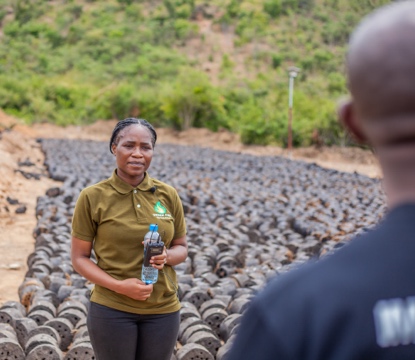
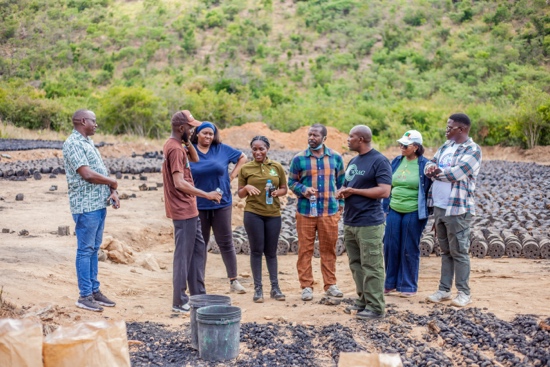

Climate-friendly briquette production at Greenfire Innovations Ltd, Lusaka
Key Takeaways from the Workshop
- Women are central to climate action yet remain under-recognised and under-financed
- The climate–care nexus creates a reinforcing cycle of constraint for grassroots women entrepreneurs
- Climate finance must be simplified, localised, and care-responsive to be inclusive
- Tools like GECIM have strong potential to bridge data and finance gaps
- Co-designed, context-specific pilot approaches are critical for the next phase of implementation
Looking Ahead
The Greenovations 2 Midterm Workshop marked a clear transition from insight to action. The workshop confirmed that strong evidence now exists on the climate–care–entrepreneurship nexus and that the main challenge lies in system alignment rather than a lack of solutions. The project is ready to move into implementation and scaling.
The way forward requires aligning finance, policy, and systems with grassroots realities; integrating care, climate, and entrepreneurship approaches; and scaling solutions that are already working on the ground. With a diverse and committed consortium spanning Africa and Latin America, the Greenovations 2 project is well-positioned to deliver on this agenda in the months ahead.